An AI chatbot for a small business is a chat window on your website that answers visitor questions in plain language, asks two or three qualifying questions, and books the visitor into a call or appointment while they are still on the page. It works around the clock, and its real job is not chatting. It is turning visitors who would never fill in a contact form into booked conversations. A good one pays for itself in a few months. A bad one is a folder of half finished chat logs nobody reads. The difference is the conversation design and what happens in the minute after the chat ends.
What does an AI chatbot actually do on a small business website?
Most small business websites have one conversion path: a contact form at the bottom of a page. It asks for a lot and promises nothing about when anyone will reply. Most visitors will not fill it in. They came with a question, did not see the answer in ten seconds, and left for the next tab.
A lead generation chatbot replaces that dead end with a conversation. Its job is narrow, and it should stay narrow. It opens with the visitor's problem, not yours. "Looking for a quote on a roof repair, or something else?" beats "Hi, how can I help you today?" because it names the thing they came for. It answers the two or three questions that come before every purchase, do you serve my area, roughly what does it cost, how soon can you come, in plain language, from your own content. It qualifies with a handful of questions, enough to route the lead. Then it captures a name and a mobile number, books the next step, and hands the lead to your CRM for a follow up within minutes. What is not on the list: small talk, pretending to be human, or twenty messages of "nurturing". The bot moves a visitor from anonymous to booked in the shortest honest path. See our plain English guide to what a chatbot is.
What makes a chatbot book calls instead of collecting dead leads?
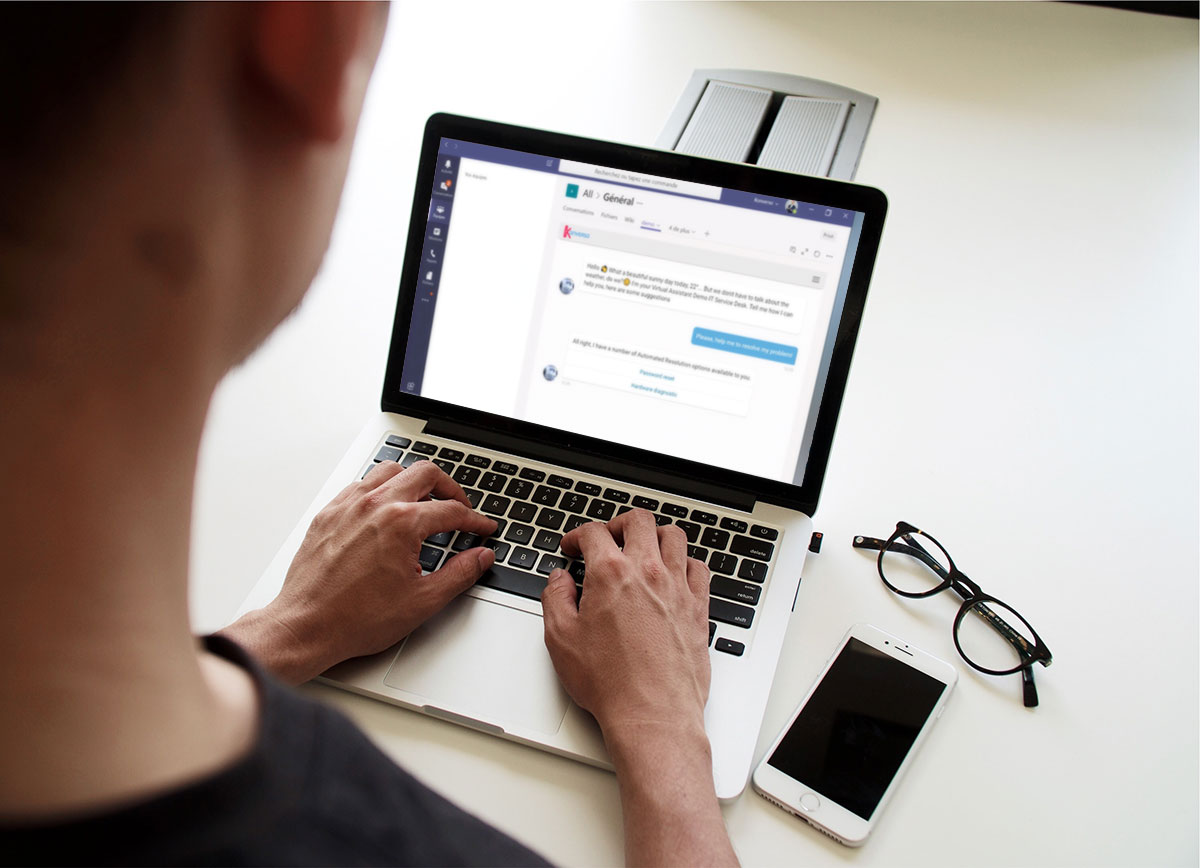
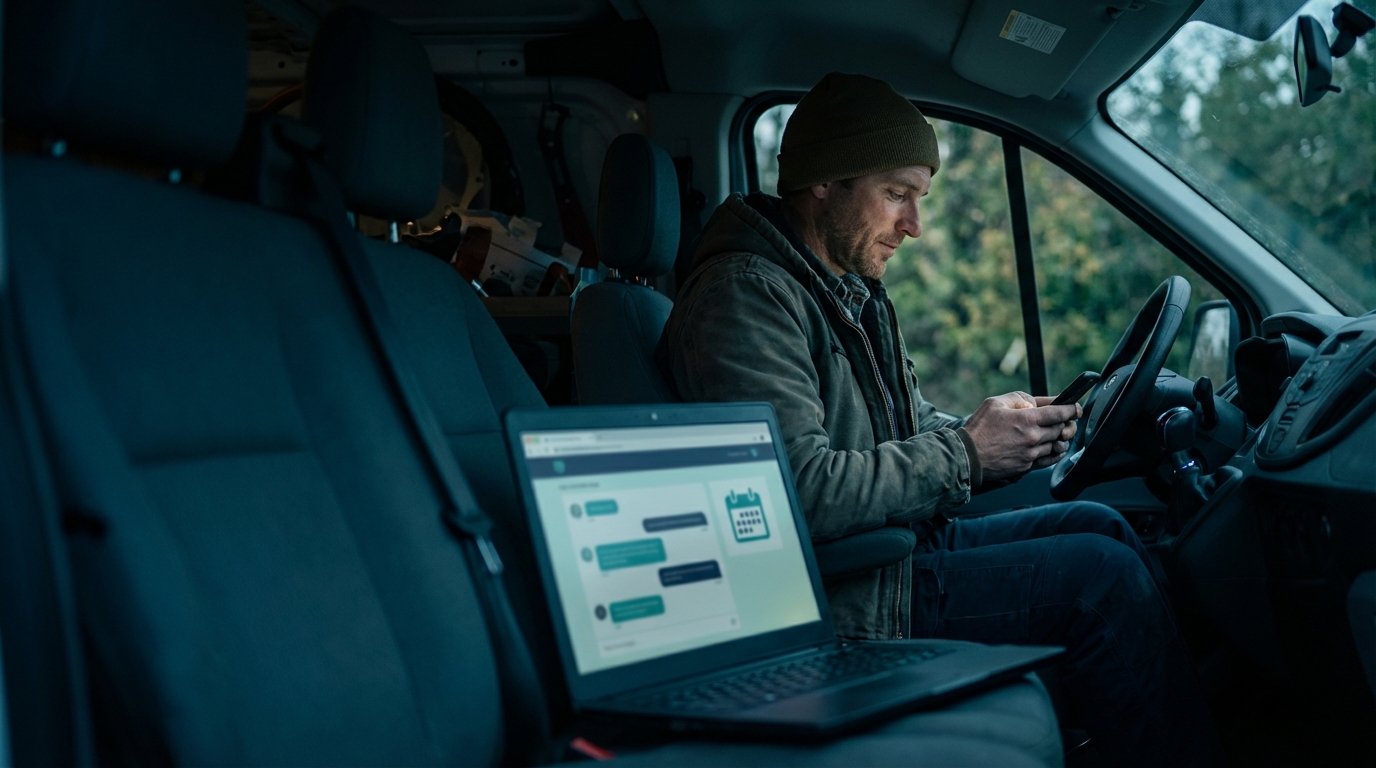
Four things, and the software is not one of them. First, the opening line names the visitor's problem. A generic greeting gets ignored, so write it for the page it sits on. Second, it gives before it asks. Answer a real question first, then ask for the phone number. A bot that demands an email address before saying anything useful is a contact form with a smile. Third, three questions, maximum. What do you need, when do you need it, and where are you based. That is enough to route almost any service lead, and the fourth question is usually where the conversation dies. Fourth, the booking happens inside the chat. The moment the visitor has to leave the chat to find your calendar page, half of them are gone. "I have booked you in for Tuesday at 11am" is a booked call. "Someone will be in touch" is not.
Then there is the part most businesses skip: the minute after the chat ends. The oft cited Harvard Business Review study found firms that respond within five minutes are far more likely to qualify a lead, yet most firms take the better part of a day to reply. Your chatbot's job is to compress that gap to zero. The lead should land in your CRM with the transcript attached, and someone, a person or an AI voice agent, should follow up while the visitor still remembers the conversation. We build around a 90 second callback for exactly this reason; see our guide to speed to lead. Good qualification hands you a name, a need, and a timeline.
How much does an AI chatbot cost a small business in 2026?
Off the shelf tools run free to about $150 a month. Free plans are genuinely usable: Tidio gives 50 billable conversations a month free, Botpress gives 100. Paid plans start around $24 a month for Tidio and $32 a month for Chatbase, rising to about $120 to $150 a month for the fuller tiers, and Landbot starts around 32 euros a month. These are fine when your needs are simple: answer questions, capture a name and number, send it to an inbox.
A custom build on your own content costs $2,000 to $40,000 to build, then $50 to $500 a month to run. A freelancer typically charges $2,000 to $10,000 for a bot that answers from your own documents and writes into your CRM. A small studio charges $8,000 to $40,000. A bot that also takes actions, like checking availability, costs two to four times more to build.
The hidden cost is the one nobody budgets for: a bot with no follow up. A $29 a month bot that dumps leads into a spreadsheet nobody opens costs you more than a $150 a month bot that pings your phone the second a qualified lead arrives. Judge the price against booked calls, not against the monthly fee. One booked job a month covers most of these tools several times over.
Which chatbot should a small business pick?
Do not start with a feature comparison. Start with where your customers already talk to you. Already using a help desk like Intercom, Zendesk, or Tidio, and only need answers rather than actions? Start with the AI assistant built into the tool you already pay for. It reads your help centre and can be live in an afternoon. Need lead capture only? A no code builder like Tidio or Landbot gets you there fastest.
Need the bot to answer from your own documents, price lists, and policies, not from generic knowledge? That is a RAG chatbot, and our guide to what a RAG chatbot is is worth reading before you buy anything. A bot that guesses your prices is worse than no bot at all. Need it to book appointments and follow up by phone as well as chat? Then you are buying a system, not a widget. Pairing it with an AI voice agent turns a captured name into a held appointment; see our buyer's guide to AI voice agents. Whatever you pick, ask three questions before you pay. Does it write leads into my CRM with the transcript attached? Does it book into my calendar inside the chat? Can a human take over mid conversation? A no on any of the three is a reason to keep looking.
How do you know if your chatbot is working?
Give it 30 days and judge it on one number: booked calls you can trace back to the bot. Chats started is a vanity metric. Track five numbers: conversations per 100 visitors, the share that reach the qualifying questions, booked calls per 100 conversations, follow up speed, and the containment rate. For lead generation, booked calls matter far more than containment. A healthy bot books calls from a visible share of its conversations within the first month. If after 30 days you have plenty of chats and no booked calls, the problem is almost never the AI model. It is the opening line, the number of questions, or the missing follow up. Fix those before you switch tools. Read ten transcripts a week for the first month: the gaps in your content show up within days.
Frequently asked questions
Are AI chatbots worth it for a small business?
Yes, when the job is lead capture and booking rather than open ended conversation. A bot that answers questions at 11pm and books a call is doing work no contact form does. Around 39 percent of chatbot conversations happen outside business hours, which is exactly when your competitors are not answering. Judge it on booked calls, not on how many chats it held.
Do customers actually like talking to a chatbot, or do they hate it?
Tolerance is high for simple tasks and low for being misled. Tidio found that 82 percent of consumers would rather talk to a bot than wait in a queue for a human, and 53 percent find waiting extremely frustrating. What people dislike is a bot that pretends to be human, gives wrong answers, or refuses to hand over to a person. Say it is automated, answer fast, and offer a human exit.
Can a chatbot replace live chat?
For most small businesses, the honest answer is hybrid. The bot handles after hours traffic and the first questions, and humans take the real conversations. A bot alone feels cold on a high value enquiry, and live chat alone leaves every after hours visitor waiting until morning. Our comparison of AI chatbots vs live chat covers which books more calls.
What is the difference between a chatbot and an AI voice agent?
A chatbot types and a voice agent talks. The chatbot catches the visitor on the page, the voice agent follows up by phone, answers missed calls, and confirms the booking. They do different jobs in the same system, and the businesses getting the most from chatbots usually run both. Our guide to what an AI calling agent is explains the voice side.
A chatbot is not a strategy. It is one piece of a lead system, and it only earns its keep when the rest of the system does its job: the right opening line, three questions at most, a booking inside the chat, and a follow up within minutes. If you want one built that way, see how we build AI chatbots or book a discovery call.